The Technology
Reengineering the Lead-Acid Battery
ArcActive has fundamentally re-engineered the negative electrode of the lead-acid battery.
Combined with modern bipolar battery architecture, our technology changes how a lead-acid battery is constructed and how its active materials are supported and utilised.
The result is a new approach to lead-acid batteries, designed to deliver longer life, improved performance and lower cost while retaining the inherent safety, recyclability and established manufacturing base of lead-acid chemistry.

Bipolar Batteries
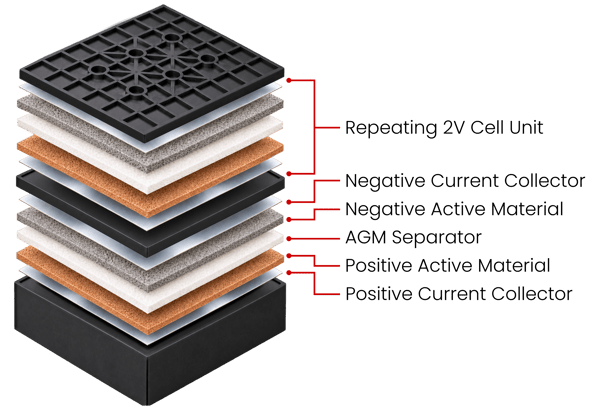
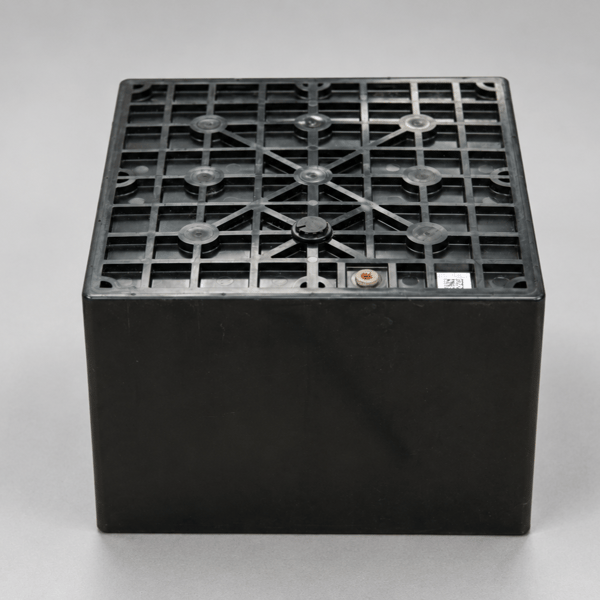
A bipolar battery is built as a stack of repeating cells, with each cell layered directly on top of the next. Rather than connecting individual cells using conventional straps and inter-cell connections, a bipolar plate forms the boundary between neighbouring cells while also carrying current directly from one cell to the next.
This creates a compact, sandwich-like structure in which the electrodes, separators and bipolar plates are arranged as parallel layers through the battery. Because current flows directly through the thickness of the battery, current is uniformly distributed across the full area of the electrode. The local current density and electrical resistance are therefore reduced relative to traditional lead-acid battery designs. The stacked construction also allows the electrodes to be maintained under high, uniform compression. High compresion helps keep the active material mechanically supported throughout repeated charge and discharge cycles, reducing degradation and helping extend battery life.
Although bipolar lead-acid batteries were first explored more than a century ago, the challenge of reliably manufacturing them at scale has only recently ben solved.
ArcActive uses an innovative bipolar technology licensed from Advanced Battery Concepts (ABC). ABC's approach combines a thin lead foil with a moulded, perforated plastic sheet to form the bipolar plate. The lead foil provides the electrical path between adjacent cells, while the plastic structure provides mechanical support and enables each cell to be sealed from its neighbours. This combination allows electrical current to pass directly through the bipolar plate while keeping the electrolyte within each cell isolated.
The result is a tightly compressed stack without the conventional lead straps and inter-cell connectors found in a traditional lead-acid battery.
GEM Electrodes
ArcActive's original fabric structured electrode was based on arc treated carbon fibre. The technology demonstrated what a fabric structured electrode could achieve, but carbon fibre is a relatively expensive material and is not part of the established lead-acid battery materials supply chain.
ArcActive therefore spent several years investigating alternative fabric substrates that could deliver the same fundamental advantages in a form better suited to high volume battery manufacture.
In 2024, that work led to Glass Electrode Material (GEM), jointly developed by ArcActive and Hollingsworth & Vose (H&V). H&V is a global leader in battery separator materials with existing manufacturing capability, glass-fibre expertise and established commercial relationships with battery manufacturers. These factors make H&V a natural partner for ArcActive to work with and develop the next generation of lead-acid electrodes.
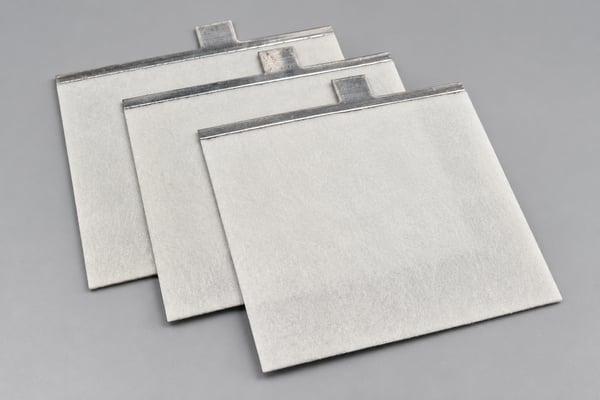
GEM replaces the conventional lead grid with a lightweight, three-dimensional glass-fibre structure that extends throughout the negative active material. This provides mechanical support throughout the electrode while enabling a more porous structure with improved access for electrolyte.
The result is an electrode that accepts charge faster, maintains its performance for longer and performs better under repeated partial-state-of-charge cycling. GEM can also retain capacity and starting performance under demanding operating conditions where conventional lead-acid electrodes progressively degrade.
By replacing the conventional lead grid, GEM can also reduce the amount of lead required in the negative electrode, creating opportunities for lighter batteries, lower material costs and improved overall battery performance.


Automotive
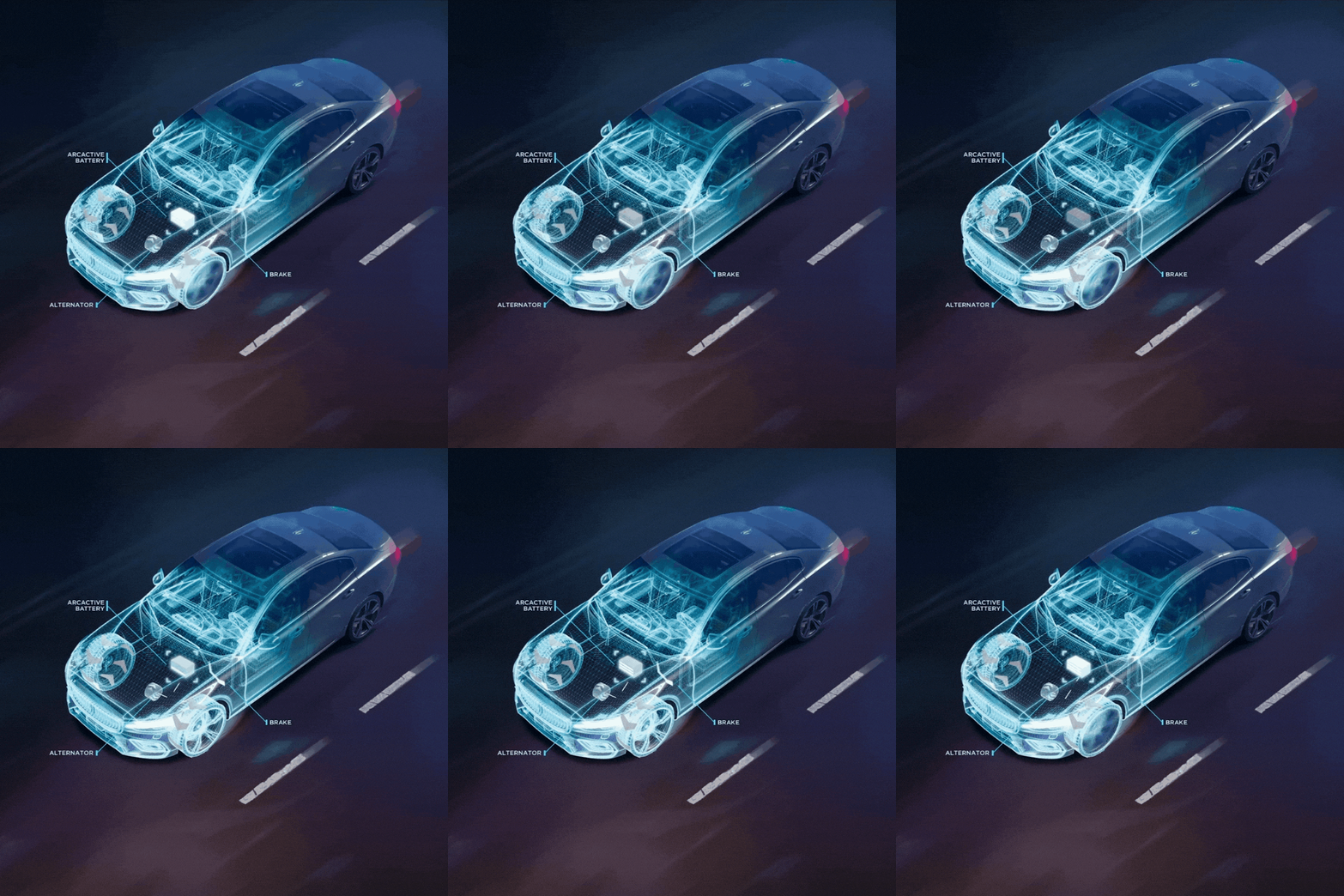
Modern vehicles place increasingly demanding requirements on their 12 V batteries. Start-stop systems switch the engine off when the vehicle is stationary, while smart alternator control allows more energy to be recovered during deceleration and stored in the battery for later use.
For these systems to work effectively, the battery needs to accept charge quickly and repeatedly throughout its life. This capability, known as Dynamic Charge Acceptance (DCA), allows more energy to be recovered when it is available, reducing the load placed on the engine and helping to lower fuel consumption and CO₂ emissions.
GEM electrodes are designed to maintain high DCA under the repeated partial-state-of-charge operation typical of modern vehicles, while retaining capacity and starting performance as the battery ages.
ArcActive is working with major battery manufacturers to develop and implement GEM technology for automotive applications.